Polar Night: Ethnic Seamless Patterns
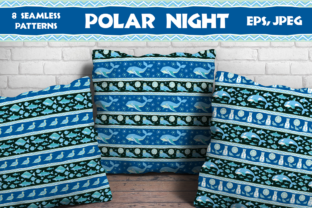
Imagine opening a digital toolkit filled with rich, hand-inspired motifs—geometric lines echoing Nordic textiles, stylized animal forms reminiscent of Siberian folklore, and rhythmic symbols drawn from Arctic Indigenous traditions. That’s the essence of Polar Night. Seamless Patterns in Ethnic Style. It’s not just a collection of backgrounds; it’s a thoughtfully curated set of eight culturally resonant, repeatable designs built for real-world use—whether you’re designing a boutique website, printing fabric samples, or crafting educational materials about global textile heritage.
What Makes These Patterns Truly Seamless—and Why It Matters
“Seamless” means each pattern tile repeats perfectly edge-to-edge, without visible breaks or misaligned seams. No awkward gaps. No jarring jumps in line weight or color. When tiled across a large banner, a full-page layout, or a custom phone case, the design flows like water. Each of the eight patterns in this package delivers that reliability—in both EPS vector format (infinitely scalable, ideal for logos or signage) and high-res JPEG (ready for web, social posts, or print mockups).
The resolution is 5000 × 5000 pixels at 300 dpi—meaning crisp detail even when printed on posters, packaging, or fabric swatches up to 16.7" × 16.7". That level of fidelity gives designers room to zoom, crop, recolor, or layer without pixelation or loss of clarity.
Who Benefits—and How They Use Them
This collection speaks especially well to creators who value authenticity *and* practicality. A small-batch clothing brand might use one of the patterns as a lining motif inside jackets inspired by northern craftsmanship. An educator building a unit on cultural textiles could embed a pattern into presentation slides or printable handouts—adding visual texture while honoring source aesthetics. A freelance illustrator might drop a subtle background behind a character illustration to evoke place and tradition without overwhelming the focal point.
Bloggers writing about mindful design or sustainable fashion often seek visuals that feel intentional—not generic stock art. These patterns offer warmth and narrative depth without requiring illustration skills. Marketers launching a wellness product line with “grounded,” “heritage,” or “earth-connected” messaging find them useful for email headers, landing page accents, or social media story frames.
Realistic Uses You Can Try This Week
- Website & UI backgrounds: Apply a low-opacity overlay of a geometric Polar Night pattern behind text blocks on a portfolio site—adds quiet rhythm without sacrificing readability.
- Digital stationery: Design printable planners or note cards using one pattern as a border or header stripe—especially effective in muted indigo, charcoal, or deep forest tones.
- Product mockups: Drop a pattern onto a t-shirt or tote bag template in Photoshop or Figma to visualize how it would look in production—no need to draw from scratch.
- Educational handouts: Use a simplified symbol-based pattern as a repeating watermark behind student worksheets about Indigenous art forms—reinforces theme without distraction.
- Social content: Create cohesive Instagram carousels where each slide shares the same corner motif—builds visual continuity across a mini-series on craft traditions.
Thoughtful Design Choices Behind the Collection
These aren’t mass-produced algorithmic repeats. Each pattern reflects deliberate pacing and balance—some emphasize symmetry and repetition (ideal for structured layouts), others lean into organic spacing and variation (better for softer, lifestyle-oriented visuals). Colors are intentionally restrained: deep navies, slate greys, moss greens, and warm ochres dominate—not because they’re trendy, but because they echo natural dyes, winter light, and traditional material palettes.
The ethnic style here avoids appropriation through restraint and respect. Motifs are stylized—not copied directly from sacred objects or ceremonial regalia. They invite appreciation, not imitation. That makes them appropriate for commercial use while still feeling grounded and meaningful.
Things to Keep in Mind Before You Download or License
First, check your software compatibility. The EPS files work smoothly in Adobe Illustrator, Affinity Designer, CorelDRAW, and most professional vector editors—but won’t open natively in Canva or basic photo apps. If you primarily use Canva or Google Slides, lean on the JPEGs (just remember to scale carefully to preserve sharpness).
Second, consider your end use. While all files are licensed for commercial projects—including client work and physical products—the patterns themselves shouldn’t be resold *as-is* as standalone clipart or pattern packs. They’re meant to be integrated, adapted, and made your own.
Third, think about context. A bold, high-contrast pattern may energize a festival poster—but overwhelm a meditation app interface. Start simple: try one pattern at 10–15% opacity as a subtle backdrop before going full intensity. Let the mood of your project guide your choice—not just what looks “cool” at first glance.
A Resource That Grows With Your Skills
Beginners will appreciate how quickly these patterns elevate a project—even with minimal design experience. Drag, drop, adjust opacity, done. But professionals also find value: the vector files allow for precise recoloring, resizing, or integration into complex layered illustrations. Educators can use them to spark conversations about pattern language across cultures. Entrepreneurs building a distinctive brand voice can use them to reinforce identity without hiring an illustrator for every asset.
Most importantly, Polar Night. Seamless Patterns in Ethnic Style. doesn’t ask you to become an expert in textile anthropology to use it well. It meets you where you are—offering beauty, function, and cultural resonance in equal measure. Whether you're sketching ideas on paper or fine-tuning a Shopify homepage, these eight patterns serve as quiet collaborators: consistent, versatile, and deeply considered.