Pool Papers: Digital Pool Party Decor for DIY Enthusiasts
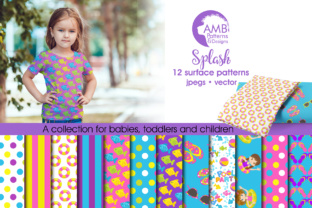
Pool Papers refers to a curated collection of digital printable papers designed specifically for pool-themed celebrations. These are not physical products shipped to your door — instead, they are high-resolution digital files intended for personal printing and crafting. Each design is created using original, high-quality clipart and custom illustrations, avoiding generic stock imagery. The collection includes a variety of patterns — such as tropical leaves, flamingos, water ripples, beach balls, and sun motifs — all formatted consistently at 12 inches by 12 inches and saved as JPEG files at 300 dpi resolution.
Why Consider Pool Papers?
People often explore Pool Papers when planning a themed pool party and seeking affordable, customizable decor options. Unlike pre-made paper goods sold in stores, digital papers offer flexibility: users can print as many copies as needed, adjust colors using editing software (if the files support it), or scale elements for different applications — from cupcake wrappers to photo booth backdrops. This makes Pool Papers especially relevant for those who enjoy hands-on event preparation, value consistency in visual design, or need decor that reflects a specific aesthetic not available commercially.
Practical Benefits and Realistic Expectations
The primary benefit of Pool Papers lies in its balance of quality and control. At 300 dpi and 12×12 inches, each file meets standard requirements for high-fidelity home or professional printing. That resolution supports crisp results on cardstock, scrapbook paper, or even fabric transfer sheets — provided the printer and media are compatible. Because each pattern is delivered as a separate JPEG, users can easily organize, preview, and select only the designs they need without sifting through layered PSDs or complex vector files.
However, expectations should align with the format’s limitations. JPEGs are raster-based, meaning they cannot be scaled infinitely without loss of clarity. While 12×12 inches at 300 dpi works well for most paper crafts, enlarging a single tile to cover a 6-foot banner would require interpolation — potentially reducing sharpness. Also, because the files are flattened JPEGs, users cannot isolate individual elements (e.g., remove a palm tree from a background) without photo-editing expertise and tools like Photoshop or GIMP.
When Pool Papers Fits Well
Pool Papers is a strong fit for individuals who:
- Have access to a reliable inkjet or laser printer capable of handling heavy paper stocks;
- Prefer designing their own party materials — such as custom drink stirrers, favor tags, or table confetti — rather than purchasing pre-cut items;
- Want cohesive visual continuity across multiple decor pieces (e.g., matching napkin liners, cup wraps, and signage);
- Are comfortable with basic digital file management and printing workflows;
- Value original artwork over mass-produced themes and want to avoid copyright concerns associated with unlicensed clipart.
In these cases, Pool Papers serves as a foundational resource — a starting point that supports creativity without requiring illustration skills or subscription-based design platforms.
When Alternatives May Be More Suitable
Pool Papers may be less appropriate for users whose needs fall outside its scope. For example:
- Large-scale installations: If you need wall-sized backdrops or vinyl decals, scalable vector files (like SVG or EPS) would offer greater flexibility and cleaner output than JPEGs.
- Commercial use: Pool Papers is licensed for personal, non-commercial use only. Those planning to sell printed goods — such as party kits on Etsy — would need explicit commercial licensing, which this product does not provide.
- Real-time customization: Users wanting to type names or dates directly onto decor before printing may find JPEGs limiting. Design tools like Canva or Cricut Design Space work better with PNGs featuring transparent backgrounds or editable text layers.
- Minimal tech comfort: Individuals unfamiliar with downloading ZIP files, extracting contents, adjusting printer settings for borderless printing, or selecting appropriate paper weight may face a steeper learning curve than anticipated.
Making an Informed Decision
Before choosing Pool Papers, consider how you intend to use the files — and whether your current tools and time allow for that workflow. Ask yourself:
- Do I already own or have easy access to a printer that handles 12×12-inch sheets or can tile larger prints accurately?
- Am I planning to use these papers for one-time printing (e.g., a single birthday party), or do I anticipate reusing similar themes across multiple events?
- How important is artistic uniqueness? If generic beach-themed prints from big-box retailers meet your standards, Pool Papers’ original artwork may not justify the extra step of digital setup.
- What’s my tolerance for minor technical troubleshooting? Printing JPEGs consistently requires attention to color profiles, bleed settings, and paper feed alignment — variables that vary by device.
It’s also worth comparing Pool Papers against alternatives on a per-use basis. Some online marketplaces offer bundles with both JPEG and SVG versions, while others provide editable templates in Google Slides or PowerPoint. If adaptability across formats matters more than exclusive design, those hybrid options may deliver broader utility — even if the individual illustrations aren’t as distinctive.
Final Considerations
Pool Papers fills a specific niche: original, print-ready pool-themed patterns for craft-oriented users who prioritize design integrity and hands-on involvement. Its value isn’t in convenience alone, but in enabling thoughtful, consistent execution — provided the user’s context supports it. It does not replace professional printing services or eliminate the need for basic technical familiarity. Nor does it promise instant results; success depends on matching the resource to realistic goals, equipment, and effort.
For those evaluating digital party decor, Pool Papers warrants consideration when originality, resolution, and thematic cohesion are priorities — and when the user is prepared to manage the printing process end-to-end. Where speed, scalability, or commercial reuse are central concerns, other solutions may better serve long-term needs.