Star and Stripes Papers: High-Resolution Patriotic Design Assets for Real-World Creative Workflows
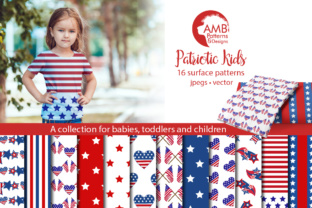
Star and Stripes Papers AMB-1357 is a curated collection of 16 original, high-fidelity patriotic patterns—each rooted in the visual language of Old Glory. These aren’t generic stock repeats or low-res web graphics. They’re purpose-built design assets: 12″ × 12″ JPEGs, 300 dpi, optimized for print and digital output without pixelation or scaling artifacts. For professionals who rely on consistency, clarity, and control—whether designing event invitations, packaging prototypes, classroom displays, or branded merchandise—this set delivers predictable quality at the asset level.
Where Star and Stripes Papers Fits in Your Production Pipeline
These patterns don’t exist in isolation. They integrate at specific points across planning, execution, and delivery phases—most often where visual cohesion meets functional need. A small business owner preparing July 4th promotional materials might use one of the Star and Stripes Papers as a background layer in Canva or Adobe InDesign before adding copy and product shots. An educator building Memorial Day lesson kits may drop a badge-style pattern into a printable worksheet template to reinforce thematic continuity. A freelance designer prototyping Veterans Day social media banners can apply a subtle stripe variant as an overlay texture—adding depth without competing with messaging.
The key is timing: these papers are most effective when selected before layout begins—not tacked on after text and imagery are locked. That early integration ensures color balance (true red, clean white, deep navy), scale alignment (12″ squares map cleanly to standard paper sizes and digital canvas presets), and file compatibility (JPEGs load instantly in virtually every design tool, no plugin required).
Workflow Integration Across Common Use Cases
Unlike decorative clipart packs that require heavy editing, Star and Stripes Papers are production-ready. Here’s how they function across real scenarios:
- Event Planning: For Independence Day booths or Homecoming rallies, use the “Stars Over Stripes” or “Badge Grid” patterns as base layers for signage templates. Their resolution holds up when enlarged to 24″ × 36″ posters via vector-based scaling workflows in Illustrator or PDF export settings.
- Educational Resource Development: Teachers creating printable flashcards or timeline anchors can insert patterns directly into Google Slides or PowerPoint. Because each is 300 dpi and 12″ square, cropping to 8.5″ × 11″ handouts preserves sharpness—even when printed on standard office printers.
- Product Packaging & Merchandise: Entrepreneurs launching limited-edition apparel or gift boxes use the “Woven Stripe” or “Starfield” variants as repeatable swatches in textile design software. The consistent DPI and square dimensions simplify tile mapping and reduce seam correction time.
- Digital Publishing: Bloggers embedding themed headers or email newsletter backgrounds benefit from the JPEG format’s universal support. No CMS rejects these files; no email client strips them out. Upload once, reuse across Mailchimp, Substack, or WordPress—no conversion needed.
Compatibility and Practical Constraints You’ll Actually Encounter
These papers work because they respect technical boundaries—not just aesthetic ones. Each file is a flat JPEG: no layers, no transparency, no embedded fonts. That means no surprises during preflight checks, no missing alpha channels in print-ready PDFs, and no opacity conflicts when layered over photographs. If your workflow includes raster-to-vector conversion (e.g., tracing a pattern for embroidery digitizing), the crisp edges and high contrast between red/white/blue elements yield cleaner paths than low-res alternatives.
That said, preparation matters. Before importing into complex layouts, verify your document’s color profile matches the intended output: use sRGB for web, CMYK-converted versions for commercial print (a quick soft-proof step in Photoshop or Affinity Photo avoids unexpected hue shifts). Also note that while all 16 patterns share the same dimensions and resolution, their visual density varies—some feature tight star clusters ideal for small-scale applications like button badges; others use wide stripe spacing better suited to banners or wall decals. Skim thumbnails first, not just names.
Organization, Reusability, and Long-Term Asset Management
Each pattern is saved as a separate file—AMB-1357-Starburst.jpg, AMB-1357-StripedBadge.jpg, etc. This naming convention supports both manual and automated organization. Drop the folder into a cloud-synced assets library, and it integrates cleanly with naming rules used by designers managing hundreds of brand elements. No need to rename or restructure before handing off to a team member or contractor.
Long-term usability hinges on two factors: version control and context tagging. Since these are static JPEGs—not editable vectors or PSDs—there’s no risk of accidental modification. Store them in a dedicated “Patriotic_Patterns_AMB-1357” subfolder within your master “Textures_Backgrounds” directory. Add metadata tags (e.g., “USA,” “Independence Day,” “300dpi”) if your DAM system supports it. That way, searching for “veterans day background” surfaces this set alongside related assets—not buried under irrelevant search results.
Quality Control in Practice: What “High Resolution” Actually Means
“300 dpi at 12 inches” isn’t marketing shorthand—it’s a functional specification. At that resolution, each pattern contains over 13 million pixels. When scaled down to fit a 4″ × 6″ photo card, it retains fine detail in star outlines and stripe edges. When stretched across a 48″ trade show backdrop (using interpolation in professional RIP software), it resamples cleanly without blurring or moiré patterns.
This matters most when outputting physical goods. Print shops routinely reject files below 200 dpi at final size—causing delays or last-minute redesigns. With Star and Stripes Papers, you eliminate that checkpoint. You also avoid the common trap of downloading free “HD” patterns that max out at 72 dpi—fine for web, useless for anything tactile.
Implementation Tips That Save Time Later
Start simple. Don’t try to use all 16 patterns in one project. Pick one that aligns with your primary message: “Badges” for honor-focused themes (Veterans Day, award certificates); “Woven Stripes” for heritage or tradition narratives; “Starfield” for expansive, aspirational contexts (community celebrations, school spirit campaigns).
Test early. Place your chosen pattern in the actual document size you’ll use—don’t judge it at thumbnail scale. Zoom to 100% in your design app to confirm star clarity and stripe uniformity. If your layout includes text overlays, run a contrast check (tools like WebAIM’s Contrast Checker work for any RGB values) to ensure legibility against red or blue zones.
Keep backups outside your working folder. Save a compressed ZIP of the full set to external storage or cloud archive. File corruption happens. A single corrupted JPEG shouldn’t force you to repurchase or recreate.
Why This Set Scales Beyond Seasonal Use
Patriotic design isn’t only about holidays. It supports institutional identity (military academies, VA hospitals), civic education (school district branding), and community development (town hall banners, parade floats). Star and Stripes Papers provides a neutral, respectful foundation—not cartoonish or overly militarized, but grounded in recognizable symbolism. That versatility means you’ll reach for these assets year after year, not just in June and November.
When integrated deliberately—not as decoration, but as infrastructure—they reduce decision fatigue, accelerate approvals, and maintain visual integrity across touchpoints. That’s not just efficient. It’s how professionals build trust through consistency.